
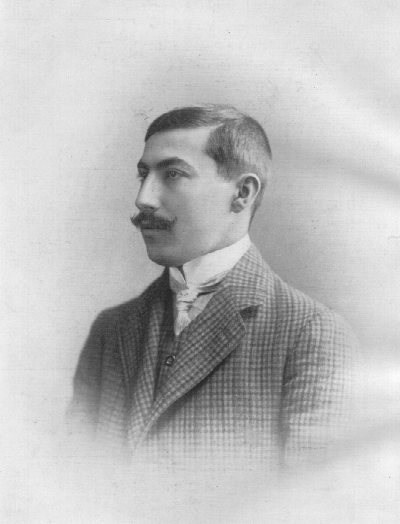
childhood
Born on 1 December 1880 in Stawiski, Poland, into a poor Jewish family. He was the 12th of 12 children, and only one sibling survived to adulthood due to extreme poverty. His father died before he was born.
Did not learn chess until age 14 or 15, extremely late for a future world-class player. He first saw two classmates playing at his religious school (cheder) and was immediately fascinated.
He was studying to become a rabbi but abandoned his Talmudic studies to devote himself entirely to chess.
His first teacher was Gersz Salwe, a prominent Polish master.
education
Received a traditional Jewish education in cheder, focusing on religious texts. He was known for his ability to decipher complex Talmudic arguments, a skill he later said helped him calculate chess combinations.
Largely self-taught in chess, he studied theory intensely from age 16 onward.
career
One of the strongest players never to become World Champion. He was a leading contender for the title from 1907 to 1914.
His most famous year was 1912, when he won five consecutive major tournaments: San Sebastian, Warsaw, Piestany, Vilna, and Breslau — a feat unmatched in chess history.
Negotiated a World Championship match with Emanuel Lasker for 1914, but the match was never played due to the outbreak of World War I.
Known for his flawless endgame technique and deep positional understanding. He played what is considered his "Immortal Game" against Georg Rotlewi in 1907, featuring brilliant queen and rook sacrifices.
Suffered from severe mental illness (likely schizophrenia) later in life, which tragically curtailed his career. He spent his final decades in a sanatorium.
stories & anecdotes
His famous quote: "60 days a year I play in tournaments, 5 days I rest, and 300 days I work on my game."
He was described as having "the most sophisticated chess games in the post-Nimzowitsch era" by Richard Réti.
Despite his illness, his contributions to opening theory (especially the Rubinstein Variation of the French Defence, the Rubinstein System in the Nimzo-Indian, and the Akiba Rubinstein Variation of the Four Knights) remain standard today.
He was a deeply religious man who would not play on the Sabbath, which sometimes affected tournament schedules.
quotes
"60 days a year I play in tournaments, 5 days I rest, and 300 days I work on my game."
"The striving to play deeply in the opening, and the so-called 'long plan'… That's what I like in chess."
publications
The Life & Games of Akiva Rubinstein (2 volumes) by John Donaldson and Nikolay Minev — the definitive biography and game collection.
Rubinstein: Move by Move by Zenón Franco — 34 of his greatest games analyzed in detail.
Uncrowned Chess Champions – Akiba Rubinstein by Boroljub Zlatanovic — 64 selected games.
Play through Akiba Rubinstein’s games
No published games are linked yet. When automation submits a PGN with this player’s slug, it will appear here automatically.
Editorial note: this profile was adapted from supplied research notes. Historical details and attributed quotations should be fact-checked before formal publication.