
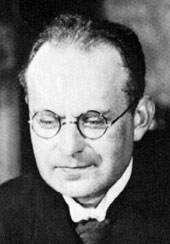
childhood
Born on 7 November 1886 in Riga, Latvia (then part of the Russian Empire), into a wealthy Jewish merchant family.
Learned chess from his father, a strong amateur, at age eight. His father showed him Anderssen's "Immortal Game" as a reward for academic success; Nimzowitsch later said: "Not only did I understand it, but I fell passionately in love with it on the spot."
He was a studious child who excelled in Talmudic studies, which he credited with developing his ability to calculate combinations.
education
Studied philosophy at the University of Berlin for one year, then dropped out and "took up his old delight of playing chess in the cafés."
He was largely self-educated in chess, developing his theories through practical play and deep reflection.
career
One of the most influential chess theorists and players of the early 20th century. He was ranked among the top players in the world from the 1910s until his death in 1935.
Founder of the "Hypermodern" school of chess, which argued that controlling the center from a distance (with pieces and fianchettoed bishops) was superior to occupying it with pawns.
His book My System (1925) is one of the most important chess books ever written, introducing concepts like prophylaxis, blockade, overprotection, and the pawn chain.
Chess Praxis (1929) is the companion volume, showing the practical application of his theories.
He never became World Champion, but he was a perennial contender and defeated many of the top players of his era.
stories & anecdotes
Nimzowitsch was famous for his eccentric personality and his intense, sometimes theatrical behavior at the board. He once jumped on a chair and shouted, "Why must I lose to this idiot?" after losing to Sämisch.
He was known for his sharp wit and his willingness to challenge the established classical doctrines of Tarrasch.
His rivalry with Siegbert Tarrasch was one of the great theoretical debates in chess history: Tarrasch championed classical principles, while Nimzowitsch pioneered the hypermodern approach.
He died in Copenhagen in 1935, relatively young, but his ideas had already revolutionized chess thinking.
quotes
"The beauty of a move lies not in its appearance but in the thought behind it."
"A passed pawn is a criminal which should be kept under lock and key."
"Prophylaxis is the art of preventing the opponent from executing his plans."
publications
My System (1925) — his magnum opus, a foundational text of modern chess strategy.
Chess Praxis (1929) — the practical companion to My System.
The Blockade — a shorter work on one of his key concepts.
Play through Aron Nimzowitsch’s games
No published games are linked yet. When automation submits a PGN with this player’s slug, it will appear here automatically.
Editorial note: this profile was adapted from supplied research notes. Historical details and attributed quotations should be fact-checked before formal publication.