
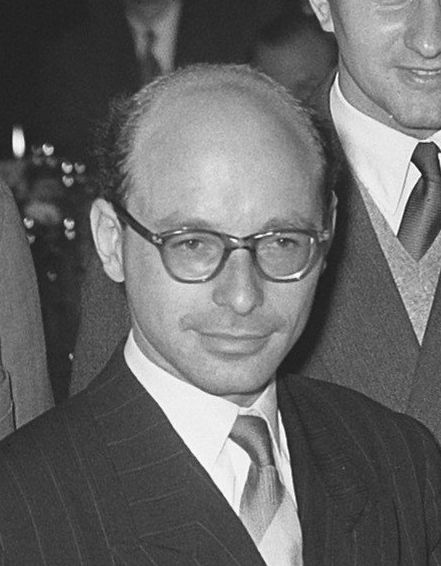
childhood
Born on 19 February 1924 in Belaya Tserkov, Ukraine, into a Jewish family.
Learned chess at a young age and showed prodigious talent. His family moved to Kiev, where he honed his skills.
His childhood was marked by the turbulence of the Soviet era, but he found refuge and purpose in chess.
education
Studied at the Kiev Art Institute and later at the Moscow Institute of Physical Culture.
His formal education was secondary to his chess development; he was largely self-taught as a player, developing his unique intuitive style.
career
One of the strongest players in the world from the mid-1940s to the mid-1970s.
Won the Soviet Championship in 1948 and 1949.
Came within one draw of becoming World Champion in 1951, drawing his match with Mikhail Botvinnik 12–12, which allowed Botvinnik to retain the title.
Six-time winner of the Moscow Championship and represented the USSR at several Olympiads, winning board prizes each time.
Along with Boleslavsky, he is credited with introducing the King's Indian Defense to the top level of competitive chess.
A renowned chess writer; his book Zurich International Chess Tournament 1953 is widely regarded as one of the best chess books ever written.
stories & anecdotes
Bronstein was known for his creative, intuitive, and sometimes risky play. He said: "I prefer to pursue somewhat unconventional and slightly risky paths."
His loss to Botvinnik in the 23rd game of their 1951 match remains controversial; Bronstein was asked many times if he was forced to lose, and he maintained there was no conspiracy, though the speculation persists to this day.
His proposed reforms to chess included abolishing adjournments — he once entered a tournament room, saw an adjourned game, and declared: "I propose to abolish the adjournment rule in chess competitions."
quotes
"I prefer to pursue somewhat unconventional and slightly risky paths."
"This quiet waiting move could have cost White half a point. At this moment, we had less than two minutes for thirteen moves. Therefore, I did not dare to play this move, which required precise calculation — a rare case when I did not trust my intuition."
publications
Zurich International Chess Tournament 1953 — his masterpiece of chess literature.
Modern Chess Self-Tutor — an unconventional instructional book.
Secret Notes (with Sergei Voronkov) — a collection of stories and reflections.
Play through David Bronstein’s games
No published games are linked yet. When automation submits a PGN with this player’s slug, it will appear here automatically.
Editorial note: this profile was adapted from supplied research notes. Historical details and attributed quotations should be fact-checked before formal publication.