
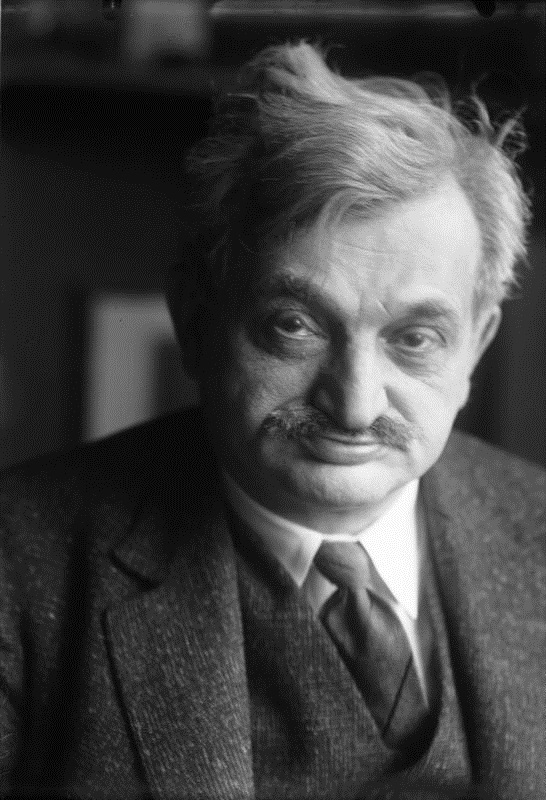
childhood
Born on 24 December 1868 in Berlinchen, Neumark (now Barlinek, Poland), the son of a Jewish cantor.
At age eleven, he was sent to Berlin to study mathematics, living with his older brother Berthold, who taught him how to play chess.
education
Studied mathematics and philosophy at the universities of Berlin, Göttingen, and Heidelberg.
Earned a doctorate in mathematics (1900/02); his doctoral work was in algebraic geometry. He was a follower of Schopenhauer and a Renaissance man of chess.
A brilliant student who also wrote plays and composed music.
career
Second World Chess Champion, holding the title for 27 years (1894–1921), the longest reign in chess history.
Defeated Wilhelm Steinitz in 1894 to claim the title and went on to defend it successfully against Marshall, Tarrasch, Janowski, and Capablanca (though the 1921 Capablanca match ended his reign).
A professional chess player who also excelled as a mathematician and philosopher; he published on algebra and game theory.
His playing style was pragmatic and psychological — he adapted to opponents rather than adhering to a single "correct" style.
stories & anecdotes
Lasker was the first player to truly professionalize chess, negotiating substantial appearance fees and prize money.
He was a friend of Albert Einstein, who wrote the foreword to a biography of Lasker.
After losing the title to Capablanca in 1921, he continued to play top-level chess for another two decades.
quotes
"On the chessboard, lies and hypocrisy do not survive long."
"When you see a good move, look for a better one."
publications
Common Sense in Chess (1895) — a classic instructional work based on lectures.
Lasker's Manual of Chess — considered one of the greatest chess books ever written.
St. Petersburg 1909 — tournament book, still a chess classic.
Play through Emanuel Lasker’s games
No published games are linked yet. When automation submits a PGN with this player’s slug, it will appear here automatically.
Editorial note: this profile was adapted from supplied research notes. Historical details and attributed quotations should be fact-checked before formal publication.