
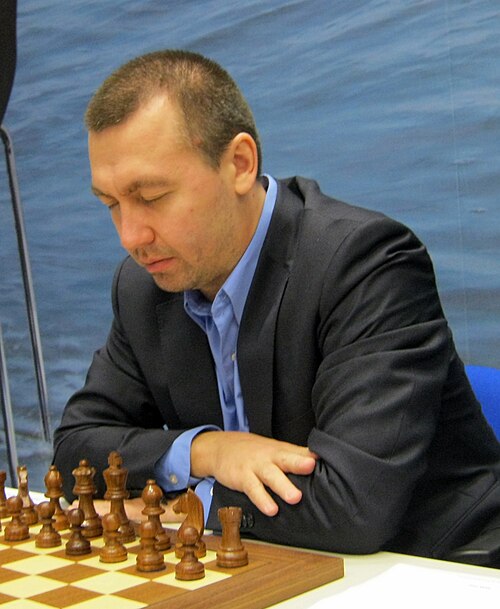
childhood
Born on 2 June 1974 in Novokuznetsk, Siberia, Russia.
At age six he moved to Leningrad, where he became a student of the renowned trainer Vladimir Zak, who also trained Boris Spassky and other top Soviet players.
His father wanted him to be a pianist and had him practice for hours a day between the ages of 6 and 8 before discovering his chess talent.
education
Moved to the USA in 1989 at age 15 with his father.
Later stopped playing chess for 8 years to study Medicine and Law, showing his intellectual breadth beyond the board.
career
Five-time US Champion (1991, 1996, 2010, 2012, 2013) and one of the most extraordinary career trajectories of any chess player.
Reached the top 10 at age 16 and played a World Championship match at age 22, losing to Anatoly Karpov in 1996.
After an 8-year hiatus from competitive chess, he returned in 2004 and immediately re-established himself as a world-elite player, winning many international tournaments and supporting the US team.
Known for his relentless will, iron nerves, and deep understanding of the game.
stories & anecdotes
Kamsky's father was a controversial figure who drove him intensely; Gata later said: "I wanted to live the life of a normal kid."
He said: "I am so engrossed in my game that I don't think about being nervous."
His 8-year break from chess to study medicine and law is one of the most unusual career paths of any top grandmaster.
quotes
"I wanted to live the life of a normal kid."
"I am so engrossed in my game that I don't think about being nervous."
"I have not opened any chess books for these years." (on his hiatus)
publications
Gata Kamsky – Chess Gamer: Volume 1 – Awakening 1989–1996 — his autobiography and game collection, covering his rise to the world elite.
Gata Kamsky – Chess Gamer: Volume 2 — continues his career after his return.
Play through Gata Kamsky’s games
No published games are linked yet. When automation submits a PGN with this player’s slug, it will appear here automatically.
Editorial note: this profile was adapted from supplied research notes. Historical details and attributed quotations should be fact-checked before formal publication.