
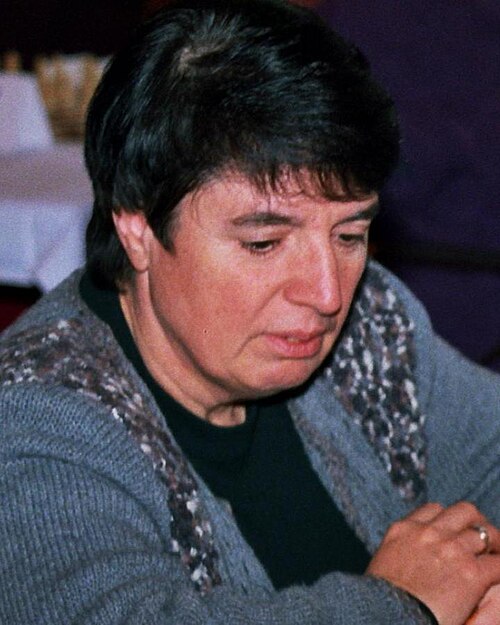
childhood
Born on 3 May 1941 in Zugdidi, Georgian SSR, Soviet Union, into a family of six children; she was the only girl among five brothers.
Learned chess at age five from her brothers, who became her first opponents.
Grew up playing games with boys in her neighborhood and competed equally with them from the start.
At age 12, she began studying chess in Tbilisi under the tutelage of the talented coach Vakhtang Karseladze.
At just fifteen, she won the Tbilisi and Georgian Championships.
education
Studied chess under Vakhtang Karseladze in Tbilisi from age 12, where she developed her independent thinking and fighting style.
career
The sixth Women's World Chess Champion, holding the title from 1962 to 1978 — a reign of 16 years.
In 1978, she became the first woman ever to be awarded the FIDE title of Grandmaster.
Defended her world title successfully four times over 13 years, a record of dominance rarely matched in women's chess.
Known as a fierce fighter with an adventurous style; she was called "永远是冒险" (always adventurous) by Chinese chess writers.
Her victory over the Soviet chess establishment paved the way for generations of Georgian and Eastern European women in chess.
stories & anecdotes
Gaprindashvili inspired a generation of Georgian girls to take up chess, including future World Champion Maia Chiburdanidze.
She was a trailblazer who proved that women could compete at the highest levels of chess.
Her five brothers all played chess, and she grew up in a family that valued sports and competition.
quotes
"She inspired me, and many other Georgian girls, to become chessplayers." — Ketevan Arakhamia, on Gaprindashvili's influence.
publications
Nona Gaprindashvili – Legendary Chess Careers by Tibor Karolyi — drives the reader through her rich chess career while interviewing her.
Play through Nona Gaprindashvili’s games
No published games are linked yet. When automation submits a PGN with this player’s slug, it will appear here automatically.
Editorial note: this profile was adapted from supplied research notes. Historical details and attributed quotations should be fact-checked before formal publication.