childhood
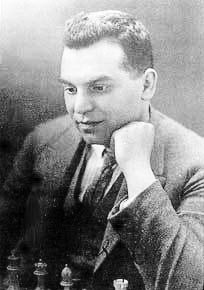
Born on 28 May 1889 in Pezinok (Bazin), Austria-Hungary (now Slovakia), into a Jewish family. His father was a medical doctor in the Austrian military.
The family moved to Vienna in 1890. His older brother Rudolph Réti became a noted pianist and composer.
Showed early intellectual brilliance, mastering painting, music, literature, and several languages by age 15.
Learned chess in childhood, and by age 12 was puzzling his family with an ongoing correspondence about chess with an elderly newspaper editor.
education
Enrolled at the University of Vienna to study mathematics.
He soon devoted more time to chess than to his studies, frequently playing at the Café Central with Vienna's chess elite.
He reportedly forgot his seminar paper at the Café Central and never recovered it.
career
One of the principal proponents of hypermodernism in chess, along with Aron Nimzowitsch and others.
Began as a combinative classical player favoring the King's Gambit, but after World War I his style shifted dramatically to hypermodern principles.
Had his greatest early successes from 1918 to 1921, winning tournaments in Košice, Rotterdam, Amsterdam, Vienna, and Gothenburg.
In 1924, defeated World Champion José Raúl Capablanca at New York 1924 in 31 moves — Capablanca's first defeat in eight years and his first since becoming World Champion.
In 1925, set a world record for blindfold chess by playing 29 games simultaneously (won 21, drew 6, lost 2).
Also a notable composer of endgame studies, including the famous Réti Endgame Study (1921).
stories & anecdotes
The Réti Opening (1.Nf3 d5 2.c4) is named after him.
When asked how many moves ahead he calculated, he famously replied: "As a rule, not a single one" or "I see only one move ahead, but it is always the best one".
His writings are considered classics of chess literature, still studied today.
Died of scarlet fever on 6 June 1929 in Prague, at only 40 years old.
quotes
"A knowledge of tactics is the foundation of positional play."
"The scheme of a game is played on positional lines; the decision of it, as a rule, is effected by combinations."
"Chess is a purely intellectual game of combat, in which luck has no place."
publications
Modern Ideas in Chess (1923) — his landmark work on hypermodern chess theory.
Masters of the Chessboard (1933) — a penetrating study of the great masters from Morphy to Capablanca.
Play through Richard Réti’s games
No published games are linked yet. When automation submits a PGN with this player’s slug, it will appear here automatically.
Editorial note: this profile was adapted from supplied research notes. Historical details and attributed quotations should be fact-checked before formal publication.