childhood
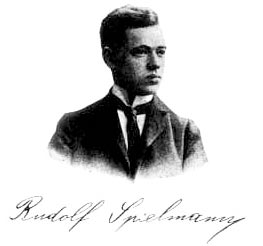
Born on 5 May 1883 in Vienna, Austria .
Learned chess at a young age and quickly embraced the Romantic school of chess, with its emphasis on gambits and attacking play .
education
Largely self-taught as a chess player, he developed his skills in the vibrant café chess culture of Vienna.
His philosophy was shaped by the Romantic tradition of Anderssen and Morphy.
career
One of the strongest players in the world in the first half of the 20th century.
After sharing second place at Carlsbad 1929 with Capablanca, he was considered one of the world's top five players .
Known as "The Master of Invention" for his brilliant sacrificial attacks and creative combinations .
His love of the King's Gambit and similar aggressive openings earned him the respect of his peers .
His life ended tragically: he died in Stockholm in 1942 at age 59, a Jewish refugee from Nazi persecution .
stories & anecdotes
Spielmann's attacking philosophy was encapsulated in his approach: "Whenever possible, attacking chess" .
He was one of the last great representatives of the Romantic school, refusing to abandon gambit play even as classical and hypermodern principles gained dominance.
His games are still studied today for their tactical brilliance and instructive value.
quotes
"A good sacrifice is one that is not necessarily sound but leaves your opponent dazed and confused."
"Whenever possible, attacking chess."
publications
The Art of Sacrifice in Chess (1935) — his most famous work, still considered a classic on the subject.
Rudolf Spielmann: Fifty Great Short Games by Nikolay Minev — a modern collection .
Play through Rudolf Spielmann’s games
No published games are linked yet. When automation submits a PGN with this player’s slug, it will appear here automatically.
Editorial note: this profile was adapted from supplied research notes. Historical details and attributed quotations should be fact-checked before formal publication.