
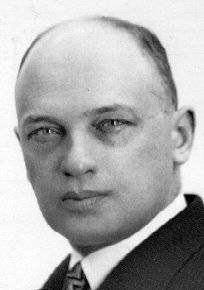
childhood
Born on 21 February 1887 in Rostov-on-Don, Russian Empire, into a wealthy Jewish family; his father owned a textile factory.
Tartakower remembered his childhood as "one long holiday" .
At age 12, he and his family left Russia for the Austro-Hungarian Empire, eventually settling in Vienna .
education
Graduated from law schools at the universities of Geneva and Vienna .
During his studies, he became interested in chess and began frequenting Viennese café chess gatherings .
career
One of the most creative and witty grandmasters in chess history, and one of the inaugural recipients of the Grandmaster title in 1950.
A leading player from the 1910s through the 1930s, winning numerous international tournaments.
Represented Poland until 1939, then France after 1939 .
Best known as a chess writer and theoretician; his annotations were celebrated for their wit and depth.
His My Best Games of Chess 1905–1954 contains 201 games and 49 fragments, all deeply annotated .
stories & anecdotes
Tartakower was famous for his aphorisms, including: "It is always better to sacrifice your opponent's pieces."
He was a polyglot and a man of immense culture, known for his erudition and humor.
During World War II, he served in the French Resistance.
quotes
"It is always better to sacrifice your opponent's pieces."
"The mistakes are all there waiting to be made."
"No one ever won a game by resigning."
publications
My Best Games of Chess 1905–1954 — his magnum opus, a collection of his finest games with quintessentially Tartakower annotations.
100 Master Games of Modern Chess — a classic survey.
A Breviary of Chess — an instructional work.
Play through Savielly Tartakower’s games
No published games are linked yet. When automation submits a PGN with this player’s slug, it will appear here automatically.
Editorial note: this profile was adapted from supplied research notes. Historical details and attributed quotations should be fact-checked before formal publication.